
An agent is more than a text generator
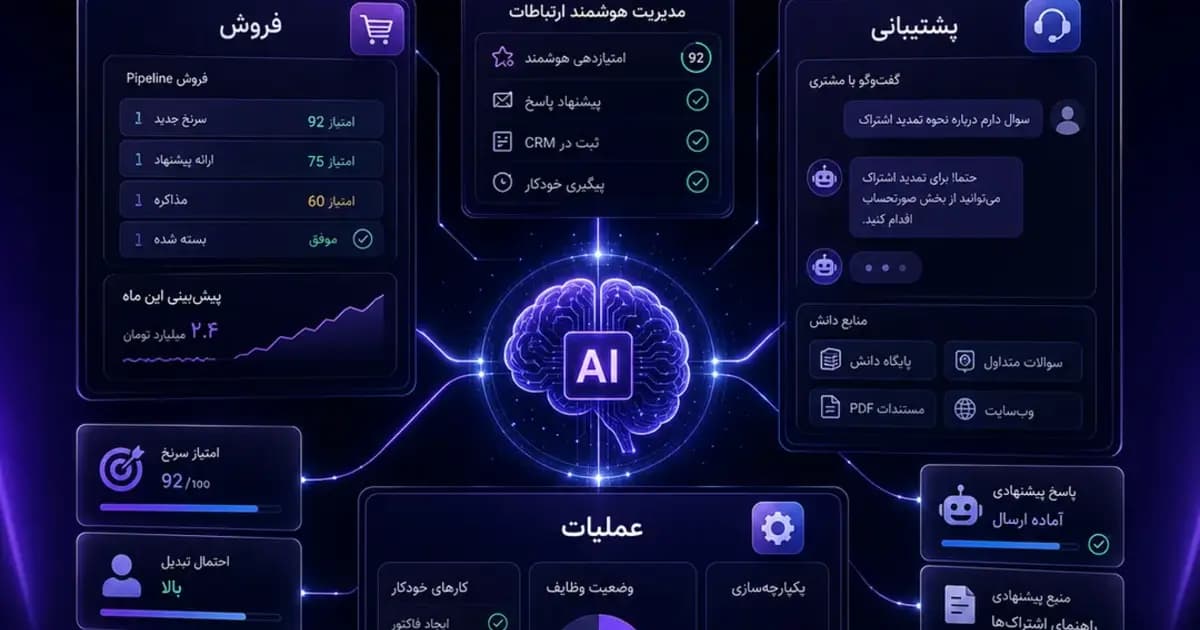
A traditional chatbot usually produces a response. An agent can assess context, choose an approved tool, retrieve data, perform a permitted action and record the result.
This capability needs strict permissions, human approval and audit logs—especially in sales, healthcare and finance.
A practical enterprise architecture
A maintainable agent separates models, knowledge and tools so each layer can be changed and evaluated independently.
- AI provider abstraction
- Versioned prompt templates
- RAG and reranking
- Tool permission layer
- Conversation memory
- Human approval
- Evaluation and tracing
How RAG improves accuracy
RAG retrieves relevant pieces from approved sources and includes them in the model context.
Quality depends on chunking, metadata, embeddings, access filtering, reranking and evaluation—not simply adding a vector database.
Sales and support use cases
A sales assistant can summarize a lead, draft a reply and recommend the next action. A support agent can answer from approved knowledge, collect required information and open a ticket when escalation is needed.
- Lead qualification
- Personalized reply drafts
- Conversation summaries
- Knowledge search
- Ticket creation
- Recurring-topic analysis
Security and quality control
Agents should never have unlimited access. Every tool needs a schema, permission boundary, data policy and explicit approval rule.
Before launch, evaluation sets and metrics such as correctness, groundedness, latency and cost should be defined.
Conclusion
AI agents create value when they are attached to a specific problem, reliable data and a real workflow. A focused, measurable launch is safer than a broad but vague system.
Planning a serious digital product?
Share the current problem and expected outcome. We will suggest a practical architecture and phased delivery path.
Start a project